
Metabolic research
Tirzepatide vs semaglutide: molecules, mechanisms and head-to-head trials
Updated 14 October 2026 · 4 min read
Semaglutide activates the GLP-1 receptor; tirzepatide activates both the GIP and GLP-1 receptors. Both are lipidated peptides built for once-weekly use, and two head-to-head trials have now compared them directly. This article explains the chemistry and summarises the key trials.
Two incretin-based peptides
Incretins are gut hormones released after a meal that boost insulin secretion. The two best known are glucagon-like peptide-1 (GLP-1) and glucose-dependent insulinotropic polypeptide (GIP). Natural GLP-1 lasts only minutes in the blood, so research has focused on modified peptides that last much longer. Semaglutide and tirzepatide are the two most studied examples.
How semaglutide is built
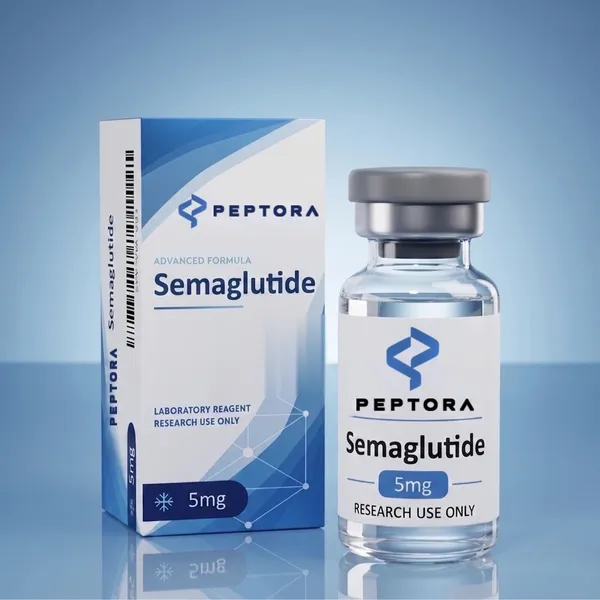
Lau and colleagues described how semaglutide was designed at Novo Nordisk. It has two amino acid changes compared with human GLP-1: aminoisobutyric acid (Aib) at position 8, which protects it from the enzyme DPP-4, and arginine at position 34. A fatty-acid side chain attached at lysine 26 binds strongly to serum albumin, which keeps the peptide in circulation. Its affinity for the GLP-1 receptor was about three times lower than that of its predecessor liraglutide, but its albumin binding was higher, and in mini-pigs its plasma half-life was 46.1 hours, enough for once-weekly administration.
How tirzepatide is built
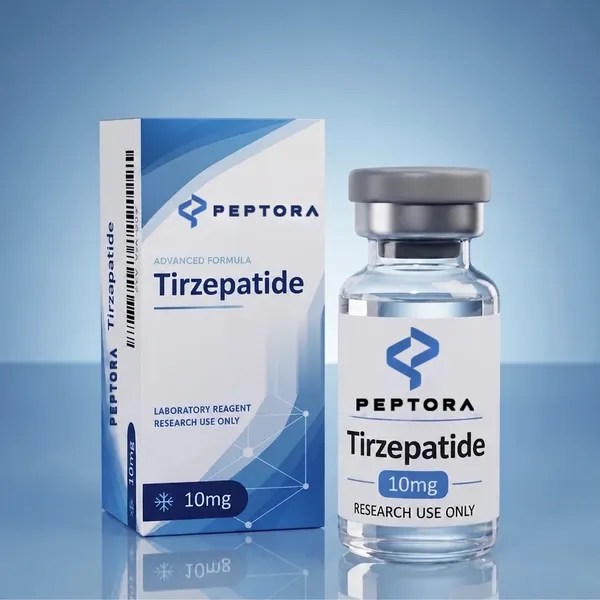
Tirzepatide, developed by Eli Lilly as LY3298176, is a single fatty-acid-modified peptide that activates both the GIP and GLP-1 receptors. Coskun and colleagues reported that it activated both receptor pathways in cells, improved glucose tolerance in mice by acting on both receptors, and reduced body weight and food intake in mice more than a GLP-1 receptor agonist alone. Its pharmacokinetics in early human studies also supported once-weekly administration.
Semaglutide in obesity: STEP 1
In the STEP 1 trial, Wilding and colleagues randomly assigned 1,961 adults with obesity, or with overweight and a related condition, without diabetes, to semaglutide 2.4 mg once weekly or placebo for 68 weeks, alongside lifestyle intervention. The mean change in body weight was a reduction of 14.9% with semaglutide compared with 2.4% with placebo. Reductions of at least 5%, 10% and 15% were reached by 86.4%, 69.1% and 50.5% of the semaglutide group, compared with 31.5%, 12.0% and 4.9% with placebo.
Tirzepatide in obesity: SURMOUNT-1
In SURMOUNT-1, Jastreboff and colleagues assigned 2,539 adults with obesity, or overweight with a related complication, without diabetes, to tirzepatide 5, 10 or 15 mg once weekly or placebo for 72 weeks. The mean reductions in body weight were 15.0%, 19.5% and 20.9% with the three tirzepatide amounts, compared with 3.1% with placebo. Half or more of the participants in the 10 and 15 mg groups (50% and 57%) reached a reduction of at least 20%, compared with 3% with placebo.
Head to head in type 2 diabetes: SURPASS-2
The first direct comparison, SURPASS-2, was published by Frías and colleagues in 2021. It enrolled 1,879 adults with type 2 diabetes, who received tirzepatide 5, 10 or 15 mg or semaglutide 1 mg once weekly for 40 weeks. HbA1c fell by 2.01, 2.24 and 2.30 percentage points with tirzepatide and by 1.86 points with semaglutide, so all three tirzepatide groups were non-inferior and superior to semaglutide. Body weight also fell more with tirzepatide, by an extra 1.9, 3.6 and 5.5 kg compared with semaglutide.
Head to head in obesity: SURMOUNT-5
In 2025, Aronne and colleagues published SURMOUNT-5, which compared the two in 751 adults with obesity but without type 2 diabetes. Participants received the highest tolerated amount of tirzepatide (10 or 15 mg) or semaglutide (1.7 or 2.4 mg) once weekly for 72 weeks. The mean reduction in body weight was 20.2% with tirzepatide and 13.7% with semaglutide, and waist circumference fell by 18.4 cm and 13.0 cm respectively. Participants on tirzepatide were also more likely to reach reductions of at least 10%, 15%, 20% and 25%.
Tolerability
In every one of these trials, the most common adverse events were gastrointestinal: nausea, diarrhoea, vomiting and constipation. They were mostly mild to moderate and occurred mainly while the amount was being increased step by step at the start. In SURPASS-2, for example, nausea affected 17 to 22% of participants on tirzepatide and 18% on semaglutide.
Reading the comparisons fairly
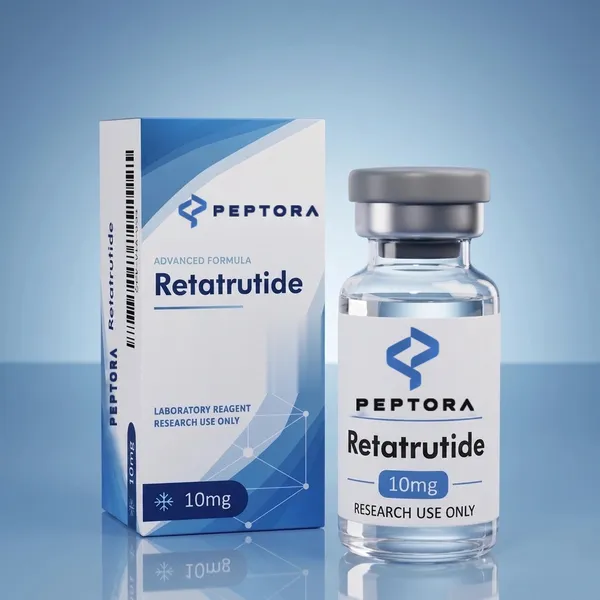
Numbers from separate trials can't be compared directly, because the populations, trial lengths and statistical approaches differ. That is why the head-to-head trials matter: in both SURPASS-2 and SURMOUNT-5, tirzepatide produced larger changes than semaglutide under the same conditions. The next generation of molecules adds more receptors, such as the triple agonist retatrutide, or combines incretins with amylin, as described in cagrilintide and amylin analogues.
Why add GIP?
GIP on its own has only a modest effect on glucose in people with type 2 diabetes, so adding GIP activity to a GLP-1 agonist was not an obvious choice. The preclinical work by Coskun and colleagues showed why it was worth testing: in mice, tirzepatide reduced body weight and food intake more than a GLP-1 receptor agonist alone. How GIP receptor activity adds to GLP-1 effects is still debated. Proposed explanations include effects on fat tissue, on insulin secretion and on nausea pathways in the brain, and some research groups are also studying GIP receptor blockade, which suggests the biology is more complex than a simple sum of two signals.
Key terms
- Incretin: a gut hormone that increases insulin release after a meal.
- Agonist: a molecule that activates a receptor.
- Estimand: the precise question a trial's main analysis answers, for example the effect regardless of whether participants stopped the study drug.
- Non-inferiority and superiority: whether a new option is at least as good as a comparator, and whether it is better.
In summary
Semaglutide and tirzepatide share a design idea, a lipidated peptide built for once-weekly use, but differ in receptor activity. In both head-to-head trials so far, the dual agonist tirzepatide produced larger changes, and both molecules now serve as reference points for newer multi-receptor and amylin-based research compounds.
Notes for laboratory work
Both peptides are lipidated and bind albumin strongly, so serum or albumin in cell culture media lowers the free concentration and shifts apparent potency. Use matched conditions when comparing them, and include native GLP-1 and GIP as reference agonists where possible. We offer semaglutide, tirzepatide and the triple agonist retatrutide, each with its current batch report.
Frequently asked questions
What is the difference between tirzepatide and semaglutide?
Semaglutide activates the GLP-1 receptor only. Tirzepatide activates both the GIP and GLP-1 receptors. Both are lipidated peptides designed for once-weekly use.
Have they been compared directly?
Yes. SURPASS-2 compared them in type 2 diabetes and SURMOUNT-5 in obesity. In both trials tirzepatide produced larger changes in HbA1c or body weight.
Why do both last a week?
Each carries a fatty-acid side chain that binds serum albumin, protecting the peptide from rapid clearance and breakdown.
References
- Lau J, Bloch P, Schäffer L, et al.. Discovery of the once-weekly glucagon-like peptide-1 (GLP-1) analogue semaglutide. J Med Chem. 2015. PubMed
- Coskun T, Sloop KW, Loghin C, et al.. LY3298176, a novel dual GIP and GLP-1 receptor agonist for the treatment of type 2 diabetes mellitus: from discovery to clinical proof of concept. Mol Metab. 2018. PubMed
- Wilding JPH, Batterham RL, Calanna S, et al.. Once-weekly semaglutide in adults with overweight or obesity. N Engl J Med. 2021. PubMed
- Jastreboff AM, Aronne LJ, Ahmad NN, et al.. Tirzepatide once weekly for the treatment of obesity. N Engl J Med. 2022. PubMed
- Frías JP, Davies MJ, Rosenstock J, et al.. Tirzepatide versus semaglutide once weekly in patients with type 2 diabetes. N Engl J Med. 2021. PubMed
- Aronne LJ, Horn DB, le Roux CW, et al.. Tirzepatide as compared with semaglutide for the treatment of obesity. N Engl J Med. 2025. PubMed
For laboratory research use only. Not for human or veterinary use. This article summarises published research and is not advice about personal use. You must be 21 or older to order.