
Buying and lab guides
How to read a peptide certificate of analysis: HPLC, LC-MS, endotoxin
Updated 14 October 2026 · 4 min read
A certificate of analysis is the best evidence you have about a vial before you open it. This guide explains each part of a typical peptide COA, what the numbers mean, what they can't tell you, and how to check that a report is genuine.
What a certificate of analysis is
A certificate of analysis (COA) is a report from a laboratory that tested a specific batch of material. For a research peptide it normally answers three questions: is this the right molecule, how pure is it, and is it free of contaminants that would interfere with lab work. Regulatory specifications for peptide drug substances, reviewed by Vergote and colleagues, follow the same logic, with separate tests for identification, purity and assay.
A COA is only meaningful for the batch it names. Before reading any numbers, check that the report matches what you have in your hand.
The header: product, batch, strength, date and laboratory
- Product name and, ideally, the sequence or CAS number.
- Batch or lot number. This should match the label on your vial.
- Declared strength, for example 10 mg per vial.
- Test date. Very old reports for a product that sells quickly deserve a question.
- The laboratory and, where available, a way to verify the report with them.
HPLC purity
Purity is normally measured by reversed-phase high-performance liquid chromatography (HPLC). The sample is passed through a column that holds molecules back according to how hydrophobic they are, and a UV detector, usually set around 214 to 220 nm where the peptide bond absorbs, records each compound as a peak. Purity is reported as the area of the main peak as a share of all peaks, for example 99.71%.
Mant and colleagues describe why reversed-phase HPLC is the workhorse for peptides: it separates the target from closely related impurities such as deletion or truncated sequences. It has limits, though. An impurity that comes off the column at exactly the same time as the main peak is invisible, compounds that barely absorb UV are under-counted, and HPLC on its own never proves which molecule the main peak is. That is the job of mass spectrometry.
LC-MS identity
Liquid chromatography with mass spectrometry (LC-MS) measures the mass of the molecules in the main peak. The report compares the measured mass with the theoretical mass calculated from the sequence. Peptides often appear with several charges, so you may see the same molecule at more than one mass-to-charge ratio, for example [M+2H]2+ and [M+3H]3+, which the laboratory converts back to a single molecular mass.
A close match confirms the identity of the main component. A report that only says "conforms" without the measured value is less useful than one that shows the numbers. For blends such as our BPC-157 + TB-500 blend, the report should list each component separately.
Content, counter-ions and water
Some reports include an assay or peptide content figure. This matters because a lyophilized peptide is usually a salt with counter-ions such as acetate or trifluoroacetate, and it contains some residual water. D'Hondt and colleagues list leftover counter-ions among the common peptide-related impurities. Trifluoroacetate deserves special attention in cell work: Cornish and colleagues showed that it reduced the proliferation of bone and cartilage cells at very low concentrations and could mask the effect of the peptide under study.
If you know the net peptide content, you can correct the concentration of the solutions you prepare. If you don't, keep in mind that the gross weight in the vial overstates the amount of free peptide.
Endotoxin
Endotoxins are lipopolysaccharides from the outer membrane of Gram-negative bacteria. They can switch on inflammatory signalling in cells at very low levels, which is why they matter for any cell culture or tissue work. Dullah and Ongkudon review how endotoxin is detected, usually with the Limulus amebocyte lysate (LAL) test, and why it binds so stubbornly to proteins and peptides. Values are reported in endotoxin units (EU) per milligram or per millilitre; the lower, the better.
Sterility and heavy metals
A sterility test checks that no bacteria or fungi grow from the sample over an incubation period, and the report usually reads "no growth". Heavy-metal testing, often by ICP-MS, looks for elements such as lead, arsenic, cadmium and mercury and reports them in parts per million. Neither test is needed for every experiment, but both tell you something about how carefully the material was made and handled.
Checking that a report is genuine
A few simple checks catch most problems:
- The batch number on the report matches the vial.
- The same report isn't reused for every size or every batch of a product.
- The laboratory exists and, ideally, offers a way to verify the document.
- The measured mass matches the theoretical mass for the sequence.
- The figures look like real measurements (for example 99.71%), not round numbers.
Impurities you may see on a chromatogram
Small peaks next to the main one usually belong to related impurities. D'Hondt and colleagues group the common ones by origin. Synthesis can leave deletion or insertion sequences (one amino acid missing or doubled), truncated chains and residues that kept a protecting group. Degradation adds oxidised forms, often at methionine, which mass spectrometry shows as an extra 16 Da, deamidated forms at asparagine or glutamine (an extra 1 Da), and dimers. A report that names or quantifies the larger impurity peaks tells you more than a single purity figure.
What a COA can't tell you
- How the vial was stored and shipped after testing.
- Whether a vial without a batch number belongs to the tested batch.
- Biological activity: a correct, pure molecule still has to be tested in your own system.
- Stability over time: a report describes the batch on the day it was tested.
Putting it together
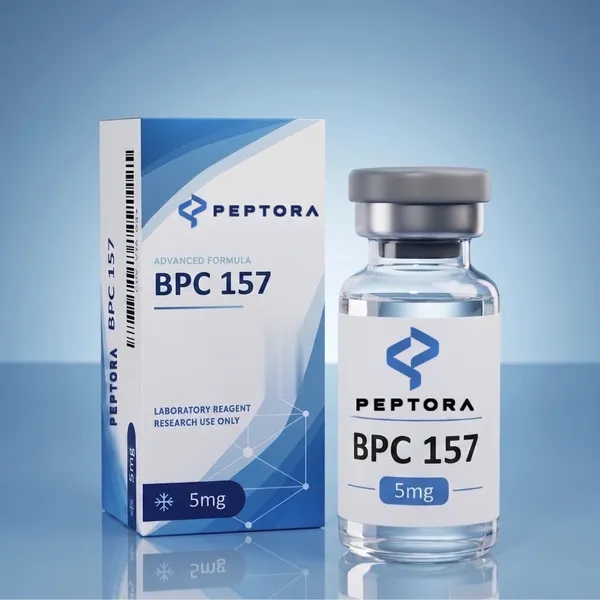
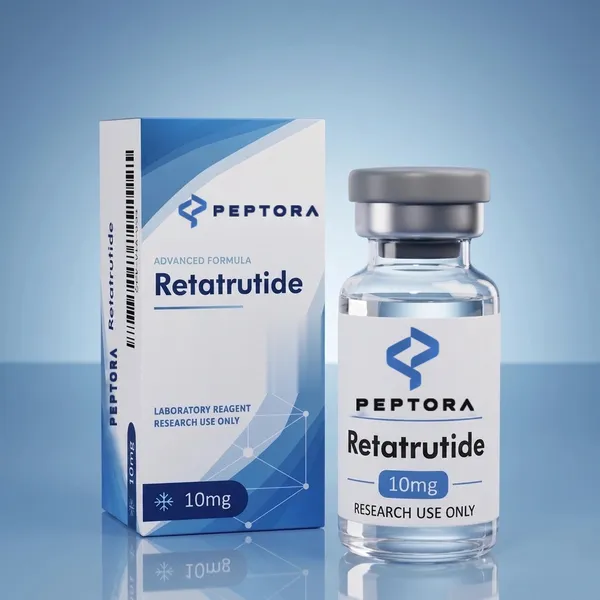
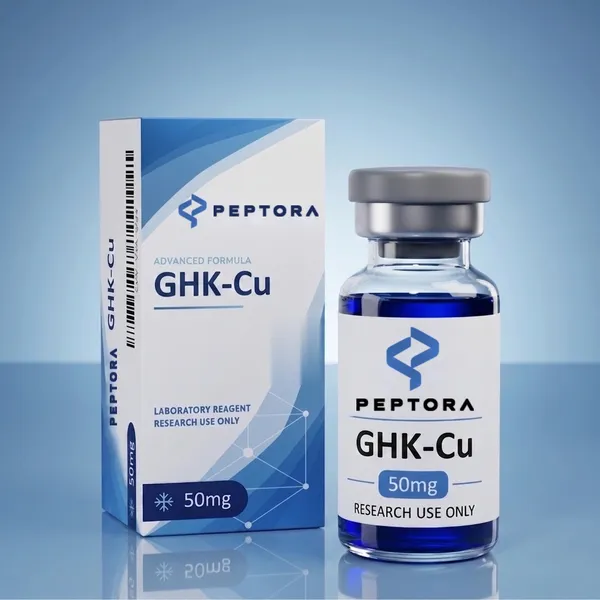
A strong COA for a research peptide shows the right batch, a measured mass that confirms identity, a high HPLC purity with the chromatogram, and, for sensitive work, endotoxin and sterility data. Our product pages, for example BPC-157, retatrutide and GHK-Cu, show the current batch report from Elementrix next to the price, and every published report is listed on the Lab reports page. For what to look for in a supplier more broadly, see how to choose a research peptide supplier.
Frequently asked questions
What does HPLC purity of 99% mean?
That the main peak makes up 99% of the total UV-detected peak area in the chromatogram. It measures how much of the material is the main compound, not which compound it is.
Why do I need LC-MS if the HPLC purity is high?
HPLC can't tell you which molecule the main peak is. LC-MS measures its mass, which confirms that it matches the expected sequence.
What is an acceptable endotoxin level?
It depends on your experiment. Lower is better, and for cell culture work many labs look for very low values reported in EU per milligram.
Where can I see Peptora Labs reports?
On each product page and on the Lab reports page, which lists every published batch.
References
- Vergote V, Burvenich C, Van de Wiele C, et al.. Quality specifications for peptide drugs: a regulatory-pharmaceutical approach. J Pept Sci. 2009. PubMed
- Mant CT, Chen Y, Yan Z, et al.. HPLC analysis and purification of peptides. Methods Mol Biol. 2007. PubMed
- D'Hondt M, Bracke N, Taevernier L, et al.. Related impurities in peptide medicines. J Pharm Biomed Anal. 2014. PubMed
- Cornish J, Callon KE, Lin CQ, et al.. Trifluoroacetate, a contaminant in purified proteins, inhibits proliferation of osteoblasts and chondrocytes. Am J Physiol. 1999. PubMed
- Dullah EC, Ongkudon CM. Current trends in endotoxin detection and analysis of endotoxin-protein interactions. Crit Rev Biotechnol. 2017. PubMed
For laboratory research use only. Not for human or veterinary use. This article summarises published research and is not advice about personal use. You must be 21 or older to order.