
Metabolic research
Cagrilintide, eloralintide and amylin analogues: the research so far
Updated 14 October 2026 · 4 min read
Amylin is a pancreatic hormone that signals fullness. Turning it into a long-acting molecule took decades because natural amylin clumps into fibrils. Cagrilintide, its combination with semaglutide, and the selective agonist eloralintide are now among the most watched molecules in metabolic research.
What amylin does
Amylin is a 37-amino-acid hormone made by the same pancreatic beta cells that make insulin, and it is released together with insulin after a meal. Hay and colleagues reviewed its biology: it slows stomach emptying, suppresses the post-meal rise in glucagon and signals satiety, acting mainly in circumventricular regions of the brain such as the area postrema. Its receptors are unusual. Each is a combination of the calcitonin receptor with one of several receptor activity-modifying proteins (RAMPs), which creates a family of amylin receptor subtypes.
A short-acting amylin analogue, pramlintide, has been used in diabetes for years, but it needs to be given several times a day. That is the gap long-acting analogues aim to fill.
Why amylin is hard to work with
Natural human amylin has a strong tendency to form amyloid fibrils, insoluble clumps that make it unstable in solution. Kruse and colleagues at Novo Nordisk described this as the central challenge in designing an amylin drug. Their answer was cagrilintide: a stable, lipidated analogue whose fatty-acid side chain binds albumin for a long half-life, while changes to the sequence reduce fibril formation.
Cagrilintide on its own
In a phase 2 trial published by Lau and colleagues in The Lancet in 2021, 706 adults with obesity, or overweight with hypertension or dyslipidaemia, received once-weekly cagrilintide at one of five amounts from 0.3 to 4.5 mg, and their outcomes were compared with placebo and with the GLP-1 receptor agonist liraglutide 3.0 mg once daily over 26 weeks. Mean body-weight reductions with cagrilintide ranged from 6.0% to 10.8% (6.4 to 11.5 kg), compared with 3.0% with placebo, and the highest amount produced larger reductions than liraglutide.
Cagrilintide with semaglutide
Because amylin and GLP-1 act through different receptors and brain regions, combining them was a logical next step. Enebo and colleagues first tested once-weekly cagrilintide at rising amounts together with semaglutide 2.4 mg in a phase 1b trial of 96 adults, focusing on safety, tolerability and pharmacokinetics.
The combination, known as CagriSema, then entered phase 3. In REDEFINE 1, published by Garvey and colleagues in the New England Journal of Medicine in 2025, 3,417 adults with obesity, or overweight and a related complication, without diabetes, received cagrilintide 2.4 mg plus semaglutide 2.4 mg, either one alone, or placebo for 68 weeks. The mean change in body weight was a reduction of 20.4% with the combination compared with 3.0% with placebo, a difference of 17.3 percentage points. Gastrointestinal adverse events affected 79.6% of the combination group and 39.9% of the placebo group, and were mostly transient and mild to moderate.
Eloralintide: a selective amylin receptor agonist
Cagrilintide acts on amylin receptors and also on the related calcitonin receptor. Eloralintide, from Eli Lilly, was designed as a selective amylin receptor agonist. In a 48-week phase 2 trial published by Billings and colleagues in The Lancet in 2025, 263 adults with obesity, or overweight and a weight-related condition, without type 2 diabetes, received once-weekly eloralintide at 1, 3, 6 or 9 mg, two step-up schemes, or placebo.
Mean body-weight reductions at 48 weeks were 9% (1 mg), 12% (3 mg), 18% (6 mg) and 20% (9 mg), with 20% and 16% in the two step-up groups, compared with 0.4% with placebo. The most common adverse events were nausea and fatigue, both more frequent at higher amounts. These are among the largest reductions reported for an amylin-based molecule used on its own.
How amylin analogues differ from incretins
- Receptors: amylin analogues act on calcitonin receptor and RAMP complexes; GLP-1 and GIP agonists act on their own incretin receptors.
- Brain targets: amylin acts mainly in the area postrema and related regions; GLP-1 signalling involves both peripheral and central pathways.
- Glucose: amylin slows stomach emptying and suppresses glucagon rather than stimulating insulin release.
- Combinations: because the pathways differ, amylin analogues are studied both alone and alongside incretin agonists such as semaglutide.
Key terms
- Amylin: a 37-amino-acid hormone co-released with insulin by pancreatic beta cells.
- Calcitonin receptor: the core receptor protein that, combined with a RAMP, forms an amylin receptor.
- RAMP: receptor activity-modifying protein; the three RAMPs combine with the calcitonin receptor to form three amylin receptor subtypes.
- Area postrema: a brain region outside the blood-brain barrier where amylin signals satiety.
- Amyloid fibril: an insoluble, ordered aggregate of protein; natural human amylin forms them readily.
- Lipidation: attaching a fatty-acid chain to a peptide so that it binds albumin and lasts longer in the blood.
Open questions
Several questions are now being studied directly. Is selective activation of amylin receptors, as with eloralintide, better tolerated or more effective than combined amylin and calcitonin receptor activation, as with cagrilintide? How do amylin analogues compare with incretin agonists when used alone, and how are the two best combined? And what explains the high rates of nausea and fatigue at higher amounts seen in some trials? Larger phase 3 programmes for these molecules are expected to answer some of these questions. Answers will also depend on how trials define and measure tolerability.
In summary
Amylin analogues have moved from a difficult-to-handle hormone to some of the most closely watched molecules in metabolic research. Cagrilintide, its combination with semaglutide and the selective agonist eloralintide each reported large changes in body weight in controlled trials, and the next step is understanding how they compare and combine.
Notes for laboratory work
Amylin analogues are designed to resist fibril formation, but they are still peptides with a known tendency to aggregate, so prepare solutions shortly before use, avoid vigorous shaking and repeated freezing and thawing, and store lyophilized material frozen and dry. Because cagrilintide is lipidated, albumin in the medium affects free concentrations in vitro. Our storage guide covers the basics.
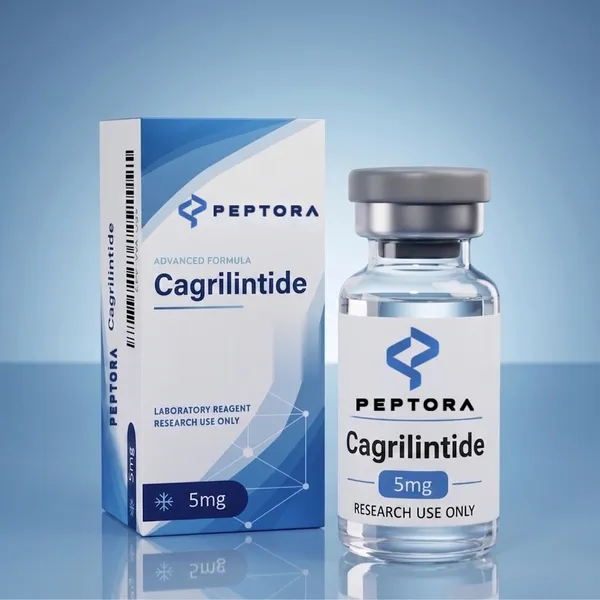
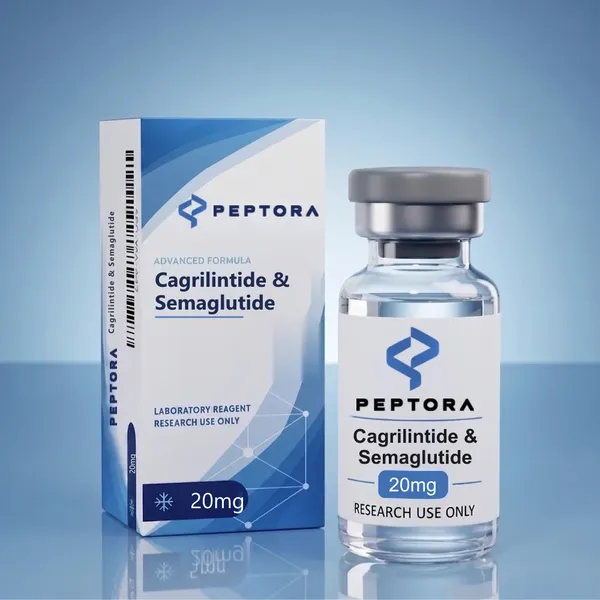
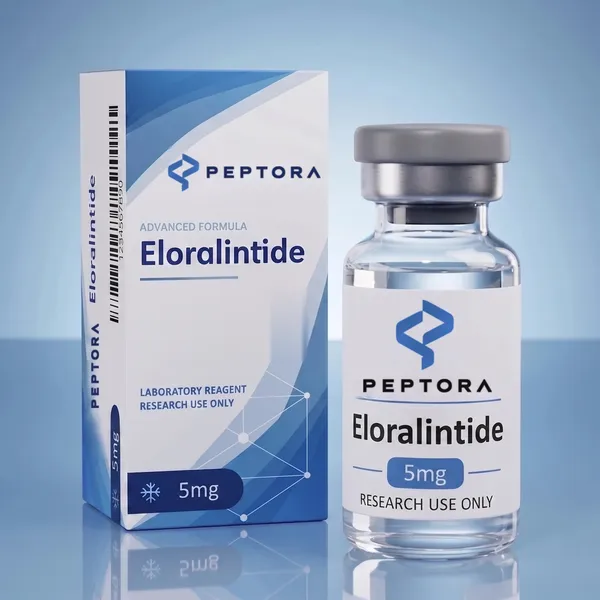
We offer cagrilintide, a cagrilintide + semaglutide blend and eloralintide, each with its current batch report. For the incretin side, see tirzepatide vs semaglutide and retatrutide research.
Frequently asked questions
What is amylin?
A 37-amino-acid hormone released with insulin by pancreatic beta cells. It slows stomach emptying, suppresses glucagon after meals and signals fullness.
What is CagriSema?
The combination of cagrilintide 2.4 mg and semaglutide 2.4 mg. In the REDEFINE 1 trial it produced a mean body-weight reduction of 20.4% over 68 weeks, compared with 3.0% with placebo.
How is eloralintide different from cagrilintide?
Eloralintide was designed as a selective amylin receptor agonist, while cagrilintide also acts on the related calcitonin receptor.
References
- Hay DL, Chen S, Lutz TA, et al.. Amylin: pharmacology, physiology, and clinical potential. Pharmacol Rev. 2015. PubMed
- Kruse T, Hansen JL, Dahl K, et al.. Development of cagrilintide, a long-acting amylin analogue. J Med Chem. 2021. PubMed
- Lau DCW, Erichsen L, Francisco AM, et al.. Once-weekly cagrilintide for weight management in people with overweight and obesity: a multicentre, randomised, double-blind, placebo-controlled and active-controlled, dose-finding phase 2 trial. Lancet. 2021. PubMed
- Enebo LB, Berthelsen KK, Kankam M, et al.. Safety, tolerability, pharmacokinetics, and pharmacodynamics of concomitant administration of multiple doses of cagrilintide with semaglutide 2.4 mg for weight management: a randomised, controlled, phase 1b trial. Lancet. 2021. PubMed
- Garvey WT, Blüher M, Osorto Contreras CK, et al.. Coadministered cagrilintide and semaglutide in adults with overweight or obesity. N Engl J Med. 2025. PubMed
- Billings LK, Hsia S, Bays H, et al.. Eloralintide, a selective amylin receptor agonist for the treatment of obesity: a 48-week phase 2, multicentre, double-blind, randomised, placebo-controlled trial. Lancet. 2025. PubMed
For laboratory research use only. Not for human or veterinary use. This article summarises published research and is not advice about personal use. You must be 21 or older to order.