
Buying and lab guides
How to store research peptides: temperature, light, moisture and time
Updated 14 October 2026 · 4 min read
Peptides degrade through a handful of well-understood chemical and physical routes. Knowing them makes storage simple: keep lyophilized peptides cold, dry and dark, avoid repeated freezing and thawing, and use solutions soon after preparing them.
How peptides break down
Peptides are chains of amino acids, and several parts of those chains are chemically fragile. In their review of protein and peptide stability, Manning and colleagues group the main routes into chemical changes (hydrolysis of the backbone, deamidation of asparagine and glutamine, oxidation, and rearrangements such as succinimide formation) and physical changes such as aggregation and adsorption to surfaces. D'Hondt and colleagues list many of the same degradation products among the impurities found in peptide medicines.
Oxidation deserves its own mention. Li, Schöneich and Borchardt describe methionine, cysteine, histidine, tryptophan and tyrosine as the residues most prone to oxidation, driven by oxygen, light and traces of metal ions. Peptides that contain these residues, for example the methionine in Semax, need a little more care than most.
Why freeze-dried peptides keep longer
Water makes almost every degradation route faster. That is why research peptides are supplied lyophilized (freeze-dried): the water is removed under vacuum at low temperature, leaving a dry cake or powder. Wang's review of lyophilization explains that the dry solid state slows chemical reactions dramatically, although the process itself and later exposure to moisture can still cause damage. In practice, a sealed lyophilized vial is the most stable form a peptide will ever be in.
When your parcel arrives
A few days at room temperature in transit is normal for lyophilized material and is not a reason for concern. When the parcel arrives, check the vials are sealed and intact, then move them to long-term storage the same day.
- Freezer at about -20 °C for long-term storage; -80 °C if you need to keep material for many months or years.
- Keep vials sealed until you need them, in their box or another dark container.
- Store them with a desiccant if your freezer is opened often, to keep moisture away.
- Record the batch number and the date you received each vial.
Opening a vial without letting moisture in
The most common storage mistake happens at the moment a cold vial is opened. Cold glass and a cold powder pull moisture out of the air as condensation, and that water then sits inside the vial when it goes back into the freezer. Let the sealed vial reach room temperature first, which takes about 15 to 30 minutes, then open it, take what you need and reseal it quickly.
Freezing and thawing
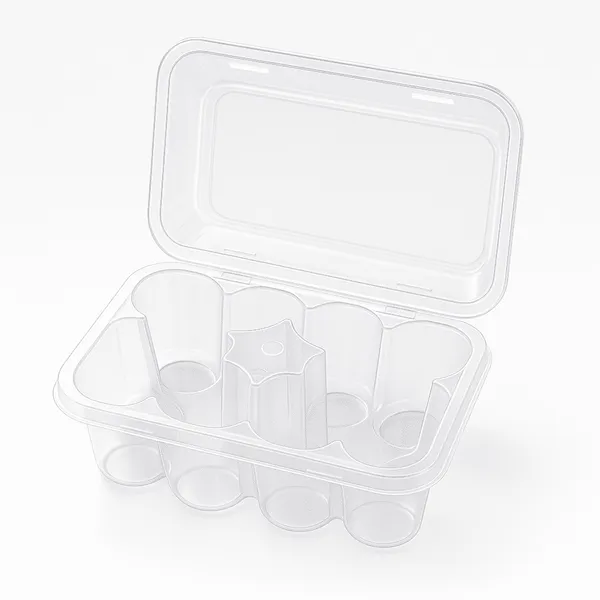
Each time a peptide solution freezes and thaws, ice crystals and changes in local concentration and pH put stress on the molecules, which can promote aggregation. Manning and colleagues discuss freezing as a source of physical instability for proteins and peptides. The simple answer is to divide solutions into single-use portions (aliquots) so that each portion is thawed only once. Small storage vials make this easy to organise.
Storing peptides in solution
Once dissolved, a peptide is far less stable than in its dry form, so plan to use solutions within a short time. As a general lab rule:
- Refrigerated at 2 to 8 °C: use within days to a few weeks, depending on the peptide and the solvent.
- Frozen aliquots at -20 °C or below: keep for longer, thawing each aliquot only once.
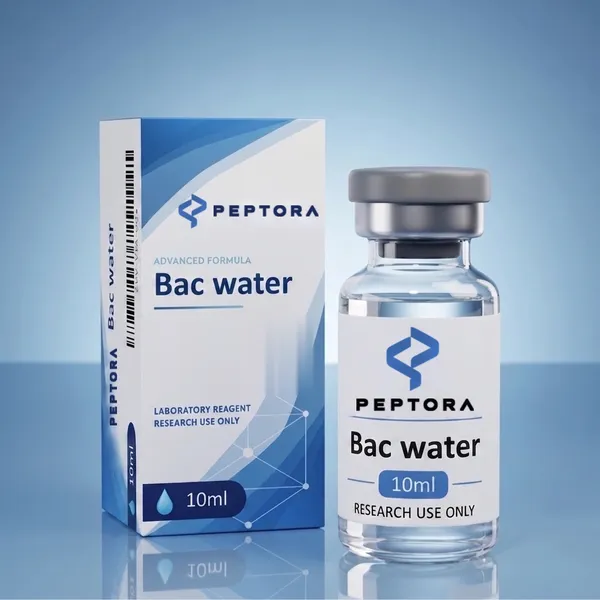
- Use sterile solvents and clean technique; a preserved solvent such as bacteriostatic water limits bacterial growth in a vial that is opened several times.
- Use low-binding tubes for very dilute solutions, because peptides can stick to plastic and glass surfaces.
Light and air
Light, especially ultraviolet light, can drive oxidation, and so can oxygen in the headspace of a vial. Keep vials in their box or in amber containers, and don't leave solutions open on the bench. For oxidation-prone peptides, some labs flush vials with nitrogen or argon before sealing them.
Peptides that need extra care
- Methionine- or cysteine-containing peptides, which oxidise more easily.
- Copper peptides such as GHK-Cu, whose copper complex should be kept away from strong chelators and reducing agents.
- Long, hydrophobic or lipidated peptides, which are more prone to aggregation in solution.
- Cofactors such as NAD+, which absorb moisture readily and are unstable in solution, especially when warm.
Signs a peptide may have degraded
Degradation is often invisible, but some signs are worth checking before you use a vial:
If you suspect a problem with material that matters for an experiment, an LC-MS check against the original lab report shows whether the mass and purity have changed.
- A lyophilized cake that has shrunk, collapsed or turned sticky, which usually means it took up moisture.
- Discolouration of a powder that should be white or off-white (copper peptides such as GHK-Cu are naturally blue).
- A solution that turns cloudy, forms a gel or shows particles, which can mean aggregation.
- A change in how easily the material dissolves compared with an earlier vial of the same batch.
How long lyophilized peptides keep
Shelf life depends on the sequence, the salt form and how well the vial is protected from moisture and light. Many lyophilized peptides keep their quality for a year or more when sealed and frozen, while solutions are measured in days or weeks. Rather than relying on a general rule, record the receipt date and batch of every vial, use older stock first, and plan purchases so that material isn't stored for longer than it needs to be.
A simple storage routine
Most labs settle on a routine like this: lyophilized vials in the freezer, sealed and dark, with batch numbers recorded; vials warmed to room temperature before opening; solutions prepared only when needed, divided into single-use aliquots and frozen; every tube labelled with the compound, concentration, solvent and date. For the steps in between, see our guide to handling lyophilized peptides in the lab. For checking what you have before you store it, see how to read a peptide COA.
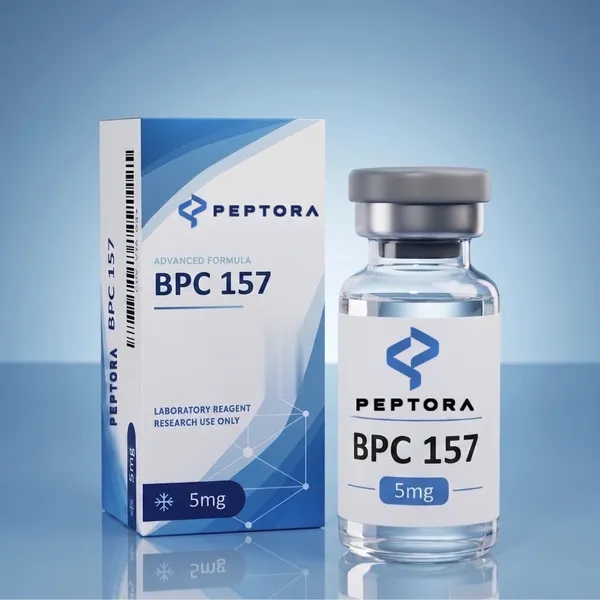
Each product page in our shop, for example BPC-157, also lists the storage conditions for that material.
Frequently asked questions
Do lyophilized peptides need to be frozen during shipping?
No. A few days at room temperature in transit is normal for lyophilized material. Move vials to the freezer when they arrive.
What temperature should I store peptides at?
Lyophilized peptides keep best in a freezer at about -20 °C, or -80 °C for very long storage, sealed and away from light and moisture.
Why should I let a vial warm up before opening it?
A cold vial pulls moisture from the air as condensation. Letting it reach room temperature first keeps water out of the powder.
How long does a peptide solution last?
Much less time than the dry powder. Refrigerated solutions are usually used within days to a few weeks; frozen single-use aliquots keep longer.
References
- Manning MC, Chou DK, Murphy BM, et al.. Stability of protein pharmaceuticals: an update. Pharm Res. 2010. PubMed
- Wang W. Lyophilization and development of solid protein pharmaceuticals. Int J Pharm. 2000. PubMed
- Li S, Schöneich C, Borchardt RT. Chemical instability of protein pharmaceuticals: mechanisms of oxidation and strategies for stabilization. Biotechnol Bioeng. 1995. PubMed
- D'Hondt M, Bracke N, Taevernier L, et al.. Related impurities in peptide medicines. J Pharm Biomed Anal. 2014. PubMed
For laboratory research use only. Not for human or veterinary use. This article summarises published research and is not advice about personal use. You must be 21 or older to order.