
Tissue research
TB-500 and thymosin beta-4: structure, active sites and research
Updated 14 October 2026 · 4 min read
TB-500 is the research name for synthetic thymosin beta-4 or its actin-binding fragment. Thymosin beta-4 is the main actin-sequestering protein in our cells, and studies link its short active sites to cell migration, blood-vessel growth and tissue repair in animal models.
Thymosin beta-4 in one paragraph
Thymosin beta-4 (Tβ4) is a small protein of 43 amino acids, with a molecular weight of about 4.9 kDa, found in almost every cell and body fluid. Its best-known job is housekeeping: it binds monomeric actin (G-actin) and holds it in reserve, which makes it the major actin-sequestering molecule in eukaryotic cells. Because actin drives cell shape and movement, Goldstein, Hannappel and Kleinman described Tβ4 as an actin-sequestering protein that "moonlights" in the repair of injured tissue.
What TB-500 means
"TB-500" is a research and trade name rather than a scientific one, and products sold under it are not all the same molecule. Some are synthetic full-length thymosin beta-4. Others are a short synthetic peptide built around the protein's central actin-binding region. Because the two differ so much in size, the identity section of the lab report is the place to check which one you have: full-length Tβ4 has a mass of about 4.9 kDa, while the short fragments are under 1 kDa.
The active sites
Sosne, Qiu, Goldstein and Wheater reviewed which parts of the Tβ4 molecule carry which activities. Several short sequences stand out:
- Ac-SDKP, the acetylated four amino acids at the start of the molecule, which generally blocks inflammation and reduces fibrosis.
- A 15-amino-acid N-terminal sequence that includes Ac-SDKP and promotes cell survival by blocking apoptosis.
- LKKTETQ, the central actin-binding domain (amino acids 17 to 23 with one extra residue), which promotes blood-vessel growth, cell migration and wound closure.
Skin wound studies
One of the earliest and most cited studies is by Malinda and colleagues, who used a full-thickness skin wound model in rats. Tβ4 given topically or into the abdominal cavity increased re-epithelialisation by 42% over saline controls at 4 days and by as much as 61% at 7 days, and the wounds contracted at least 11% more by day 7. They also saw more collagen deposition and more new blood vessels, and in a cell migration assay, as little as 10 picograms of Tβ4 stimulated keratinocyte migration two- to three-fold.
Heart studies
Tβ4 attracted wider attention after two papers in Nature. Bock-Marquette and colleagues showed that Tβ4 promotes the migration of heart muscle and endothelial cells in the embryonic heart and improves the survival of cardiomyocytes in culture. It formed a complex with PINCH and integrin-linked kinase (ILK), activating the survival kinase Akt. In mice with a tied-off coronary artery, Tβ4 increased ILK and Akt activity, improved early cardiomyocyte survival and improved heart function.
Smart and colleagues then found that Tβ4 is essential for the development of coronary blood vessels in mice and that it can stimulate quiescent adult epicardial cells to grow out and form new vascular cells. Knocking down Tβ4 reduced levels of its cleavage product Ac-SDKP, which on its own enhanced endothelial cell formation from adult epicardial precursors.
How the pieces fit together
Taken together, the research suggests that Tβ4 acts on several steps of tissue repair at once: it mobilises cells by managing the actin pool, supports cell survival through the ILK-Akt pathway, encourages blood-vessel growth through the LKKTETQ region, and dampens inflammation and fibrosis through Ac-SDKP. Goldstein and colleagues list potential research areas ranging from skin and corneal wounds to the heart and brain after hypoxic injury.
Limits of the evidence
Most of the work described here was done in cells and animals. Thymosin beta-4 has been studied in early clinical research in areas such as eye and skin wounds, but it is not an approved medicine in the UK, the US or the EU. Findings for full-length Tβ4 also do not automatically apply to short fragments sold as TB-500, because each fragment carries only some of the protein's active sites.
Key terms
- G-actin and F-actin: single actin molecules (G-actin) assemble into filaments (F-actin) that shape and move cells; thymosin beta-4 binds G-actin and holds it in reserve.
- Ac-SDKP: the acetylated N-terminal tetrapeptide of thymosin beta-4, released by enzymatic cleavage.
- LKKTETQ: the central actin-binding sequence (amino acids 17 to 23 plus one residue), linked to cell migration and blood-vessel growth.
- ILK and PINCH: proteins at cell adhesion sites that, together with thymosin beta-4, activate the survival kinase Akt.
- Epicardium: the outer layer of the heart, whose cells can give rise to new vascular cells.
- Re-epithelialisation: the regrowth of the skin's surface layer over a wound.
Open questions for researchers
Several practical questions remain open. Which active site drives an effect in a given model, and does a short fragment reproduce it, or is the full protein needed? How much of the activity of full-length thymosin beta-4 in vivo comes from its cleavage product Ac-SDKP? And how do findings in rodent skin and heart models carry over to other tissues? Testing the full-length protein, a defined fragment and Ac-SDKP side by side is one way to separate these effects, and measuring Ac-SDKP levels alongside the main readout helps interpret the data. Comparing material from different suppliers also requires checking that each is the same molecule, which the measured mass on the lab report confirms.
In summary
Thymosin beta-4 is one of the best-understood repair-related proteins at the molecular level, with defined active sites and published studies in skin, eye and heart models. TB-500 products may be the full protein or a fragment, so the lab report decides which of these findings apply to the material in your vial.
Notes for laboratory work
Check the lab report to confirm whether a TB-500 product is full-length Tβ4 or a fragment, using the measured mass. Like other lyophilized peptides, keep it frozen, dry and dark, and prepare solutions shortly before use; see storing research peptides.
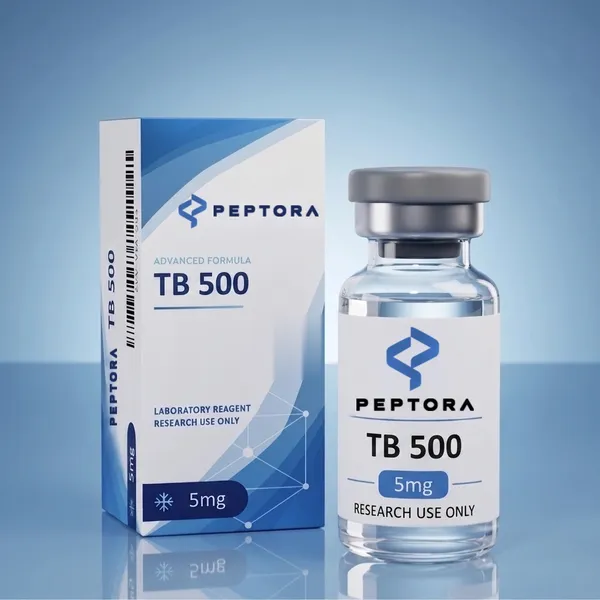
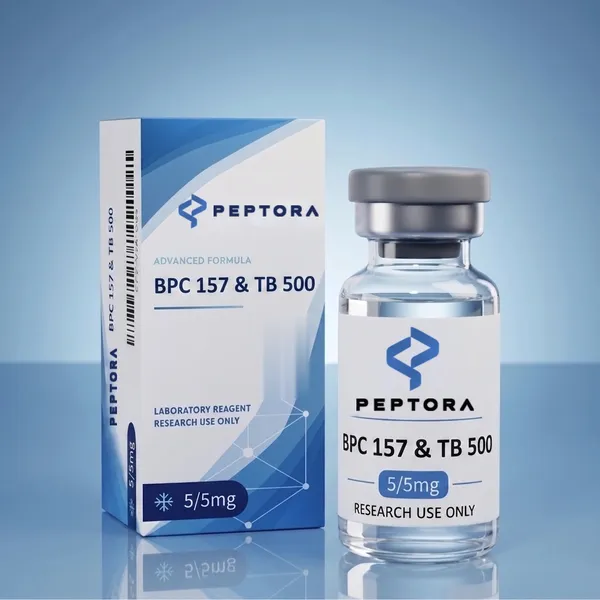
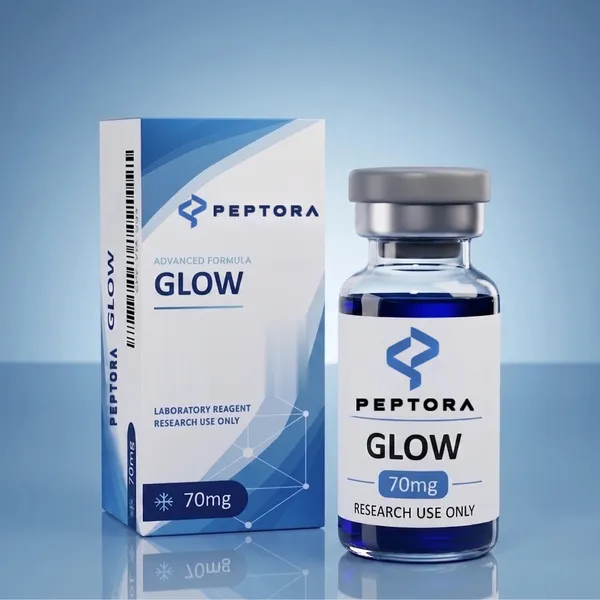
Our TB-500 is listed with its current batch report. For research that pairs it with BPC-157 there is a BPC-157 + TB-500 blend, and the GLOW blend combines GHK-Cu, BPC-157 and TB-500 in one vial. For a side-by-side look at the two peptides, see BPC-157 vs TB-500.
Frequently asked questions
Is TB-500 the same as thymosin beta-4?
Not always. Some TB-500 products are synthetic full-length thymosin beta-4; others are a short fragment built around its actin-binding region. The measured mass on the lab report tells you which.
What does thymosin beta-4 do in cells?
It binds G-actin and holds it in reserve, which helps control cell shape and movement. Its short active sites are linked to cell migration, survival, blood-vessel growth and reduced fibrosis.
What is Ac-SDKP?
The acetylated first four amino acids of thymosin beta-4. It is released when the protein is cleaved and is associated with anti-inflammatory and anti-fibrotic activity.
References
- Goldstein AL, Hannappel E, Kleinman HK. Thymosin beta4: actin-sequestering protein moonlights to repair injured tissues. Trends Mol Med. 2005. PubMed
- Sosne G, Qiu P, Goldstein AL, et al.. Biological activities of thymosin beta4 defined by active sites in short peptide sequences. FASEB J. 2010. PubMed
- Malinda KM, Sidhu GS, Mani H, et al.. Thymosin beta4 accelerates wound healing. J Invest Dermatol. 1999. PubMed
- Bock-Marquette I, Saxena A, White MD, et al.. Thymosin beta4 activates integrin-linked kinase and promotes cardiac cell migration, survival and cardiac repair. Nature. 2004. PubMed
- Smart N, Risebro CA, Melville AA, et al.. Thymosin beta4 induces adult epicardial progenitor mobilization and neovascularization. Nature. 2007. PubMed
For laboratory research use only. Not for human or veterinary use. This article summarises published research and is not advice about personal use. You must be 21 or older to order.