
Tissue research
BPC-157 vs TB-500: how the two tissue-research peptides compare
Updated 14 October 2026 · 4 min read
BPC-157 and TB-500 are the two best-known tissue-research peptides, and they are often mentioned together. They come from different proteins, act through different pathways and have been studied in different models. This comparison sets the evidence for each side by side.
Two peptides, two very different origins
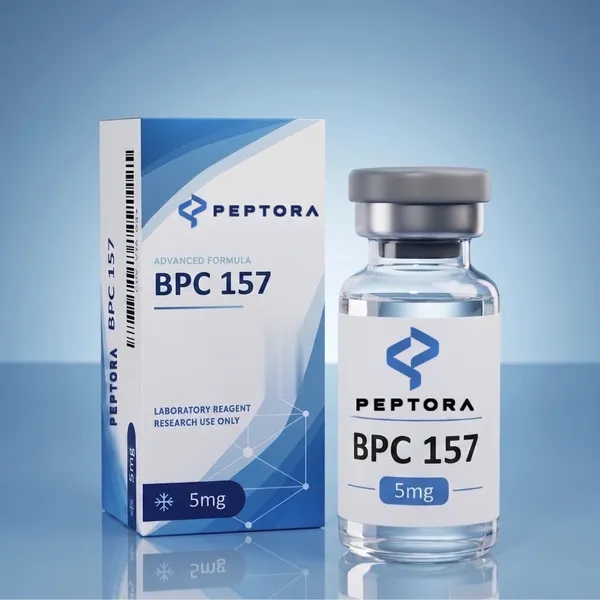
BPC-157 is a 15-amino-acid fragment of body protection compound, a protein isolated from human gastric juice. It is unusually stable, even in gastric juice, and most of its research comes from studies of the gut and of musculoskeletal tissue in rodents.
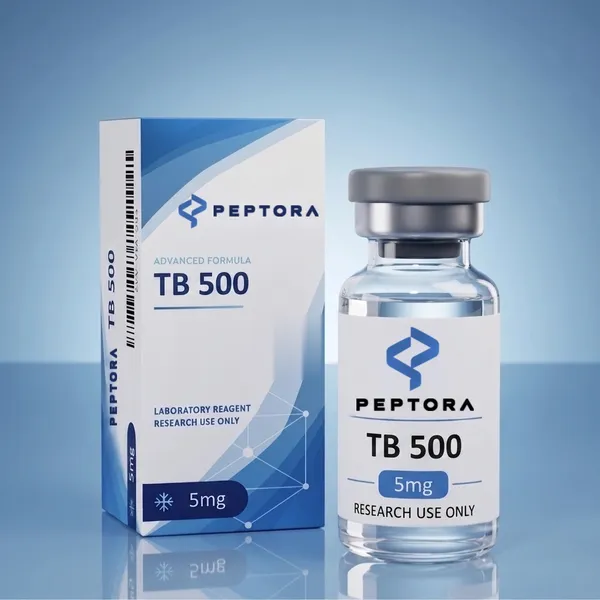
TB-500 is the research name for synthetic thymosin beta-4, a 43-amino-acid protein present in almost every cell, or for a short fragment built around its actin-binding region. Thymosin beta-4 is the main protein that holds actin in reserve inside cells, which links it directly to how cells move and change shape.
At a glance
- Size: BPC-157 has 15 amino acids (about 1,419 g/mol); full-length thymosin beta-4 has 43 (about 4.9 kDa), while TB-500 fragments are much smaller.
- Natural source: BPC-157 is a partial sequence of a gastric juice protein; thymosin beta-4 occurs in nearly all cells and body fluids.
- Best-known activity: BPC-157 is linked to cell migration through FAK-paxillin and to blood-vessel growth through VEGFR2; thymosin beta-4 to actin sequestering, cell survival through ILK-Akt and blood-vessel growth through its LKKTETQ region.
- Main models: BPC-157 in rodent gut, tendon, ligament and muscle injury; thymosin beta-4 in skin wounds, the cornea and the heart.
- Status: neither is an approved medicine in the UK, the US or the EU.
How BPC-157 is thought to work
In tendon fibroblasts from rats, Chang and colleagues found that BPC-157 did not speed up cell division but increased cell outgrowth from tendon tissue, survival under oxidative stress and cell migration, which they tied to activation of the FAK-paxillin pathway that controls how cells attach and move. Hsieh and colleagues found that BPC-157 increased blood-vessel formation in several models and raised the expression and activation of VEGF receptor 2 in endothelial cells, switching on the VEGFR2-Akt-eNOS pathway. Our BPC-157 research overview covers these studies in more detail.
How thymosin beta-4 is thought to work
Thymosin beta-4 works partly through its effect on actin and partly through short active sites. Sosne and colleagues describe three: the N-terminal Ac-SDKP, which reduces inflammation and fibrosis; a 15-amino-acid N-terminal sequence that supports cell survival; and the central LKKTETQ region, which promotes cell migration and blood-vessel growth. Bock-Marquette and colleagues showed that thymosin beta-4 forms a complex with PINCH and integrin-linked kinase, activating the survival kinase Akt in heart cells. Our TB-500 and thymosin beta-4 article explains these in full.
Where the pathways overlap
Both peptides end up touching the same broad processes: cell migration, cell survival and the growth of new blood vessels. They get there by different routes. BPC-157 acts on adhesion signalling (FAK-paxillin) and on the VEGF receptor system, while thymosin beta-4 acts on the actin pool itself, on the ILK-Akt survival pathway and, through Ac-SDKP, on inflammation and fibrosis. Akt appears in both stories, through eNOS for BPC-157 and through ILK for thymosin beta-4.
The models each has been studied in
Most BPC-157 evidence comes from rodent models of gut injury and of tendon, ligament and muscle damage. Cerovecki and colleagues, for example, reported functional, biomechanical and histological improvements in rats after the knee's medial collateral ligament was cut. Gwyer, Wragg and Wilson reviewed this work and noted that almost all of it was done in small rodents by a small number of research groups.
Thymosin beta-4 evidence is broader in type: skin wound models, where Malinda and colleagues reported faster re-epithelialisation and wound contraction in rats, eye surface research, and heart models published in Nature, where it improved heart cell survival after a coronary artery was tied off in mice and mobilised adult epicardial progenitor cells.
Why researchers study them together
Because the two peptides reach similar processes through different pathways, some research designs combine them to see whether the effects add up. That is a reasonable hypothesis to test, but it is worth being clear that no peer-reviewed study has compared the two head to head or tested the combination against each one alone. Anyone designing such a study needs the right controls: each peptide alone, the combination and a vehicle control.
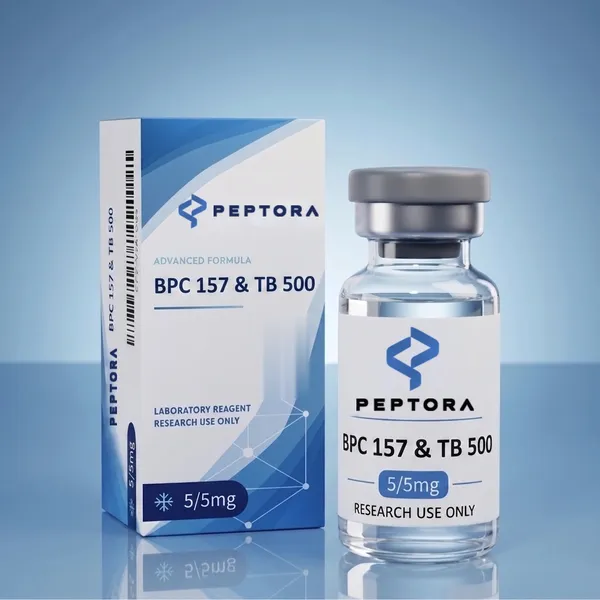
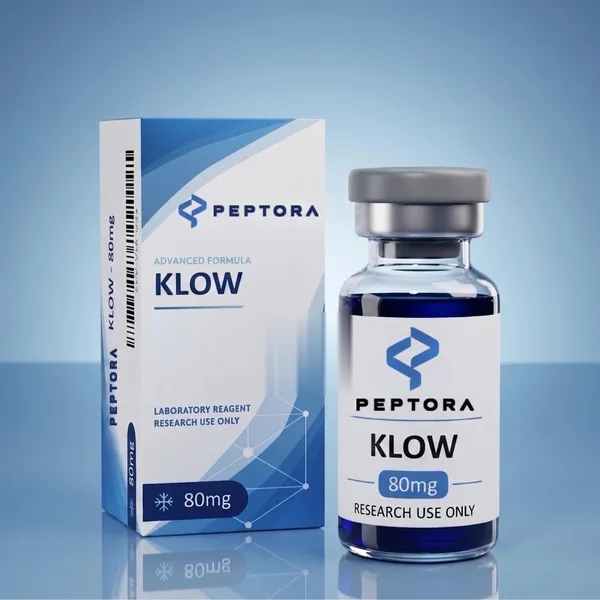
For that kind of work we offer a BPC-157 + TB-500 blend with equal amounts of each, and the KLOW blend, which adds GHK-Cu and KPV. Separate vials of each peptide give you more control over the ratio.
Practical differences in the lab
- Identity checks: BPC-157 is one defined sequence; TB-500 may be full-length thymosin beta-4 or a fragment, so check the measured mass on the lab report.
- Molar amounts: at the same mass, a solution of BPC-157 holds over three times as many molecules as one of full-length thymosin beta-4, which matters when comparing them at equal molar concentrations.
- Storage: both are supplied lyophilized and keep best frozen, dry and dark; see storing research peptides.
Designing a comparison study
A fair comparison starts with the units. Equal masses of the two peptides contain very different numbers of molecules, so many designs compare equal molar concentrations instead. Include each peptide alone, the combination, and a vehicle control prepared with the same solvent and counter-ion. Choose readouts that match the pathways involved: cell migration and scratch-closure assays for both, endothelial tube formation for blood-vessel growth, Akt phosphorylation for survival signalling, and histology or biomechanics in animal models. Several time points help, because migration and signalling changes appear within hours while tissue changes take days or weeks. Record batch numbers and confirm identity for both peptides before you start.
The bottom line
BPC-157 and TB-500 are often grouped together, but they are not interchangeable. BPC-157 is a small, very stable gastric peptide with a deep but narrow rodent literature; thymosin beta-4 is a ubiquitous actin-binding protein with a broader set of models and better-defined active sites. Choosing between them, or combining them, should follow from the pathway and model you want to study.
Frequently asked questions
What is the main difference between BPC-157 and TB-500?
BPC-157 is a 15-amino-acid fragment of a gastric juice protein linked to FAK-paxillin and VEGFR2 signalling. TB-500 is synthetic thymosin beta-4 or its fragment, an actin-binding protein linked to cell migration, survival and blood-vessel growth.
Have BPC-157 and TB-500 been compared directly?
No peer-reviewed study has compared them head to head or tested the combination against each one alone.
Why are they sold as a blend?
Some research designs study both peptides together because they act through different pathways on similar processes. Separate vials allow more control over the ratio.
References
- Chang CH, Tsai WC, Lin MS, et al.. The promoting effect of pentadecapeptide BPC 157 on tendon healing involves tendon outgrowth, cell survival, and cell migration. J Appl Physiol. 2011. PubMed
- Hsieh MJ, Liu HT, Wang CN, et al.. Therapeutic potential of pro-angiogenic BPC157 is associated with VEGFR2 activation and up-regulation. J Mol Med. 2017. PubMed
- Cerovecki T, Bojanic I, Brcic L, et al.. Pentadecapeptide BPC 157 (PL 14736) improves ligament healing in the rat. J Orthop Res. 2010. PubMed
- Gwyer D, Wragg NM, Wilson SL. Gastric pentadecapeptide body protection compound BPC 157 and its role in accelerating musculoskeletal soft tissue healing. Cell Tissue Res. 2019. PubMed
- Sosne G, Qiu P, Goldstein AL, et al.. Biological activities of thymosin beta4 defined by active sites in short peptide sequences. FASEB J. 2010. PubMed
- Bock-Marquette I, Saxena A, White MD, et al.. Thymosin beta4 activates integrin-linked kinase and promotes cardiac cell migration, survival and cardiac repair. Nature. 2004. PubMed
- Malinda KM, Sidhu GS, Mani H, et al.. Thymosin beta4 accelerates wound healing. J Invest Dermatol. 1999. PubMed
For laboratory research use only. Not for human or veterinary use. This article summarises published research and is not advice about personal use. You must be 21 or older to order.