
Tissue research
GHK-Cu copper peptide research: skin, connective tissue and gene data
Updated 14 October 2026 · 4 min read
GHK is a tiny tripeptide found in human blood that binds copper to form GHK-Cu. Decades of research link it to collagen and connective-tissue remodelling, and gene-expression data suggest it influences thousands of genes. Here is what the research covers and how to handle the peptide in the lab.
What GHK-Cu is
GHK is the tripeptide glycyl-L-histidyl-L-lysine (Gly-His-Lys). It occurs naturally in human plasma, saliva and urine, and Pickart and colleagues note that its level in plasma declines with age. GHK binds copper(II) ions very strongly, and the resulting complex, GHK-Cu, is the form most often studied. In solution it has a characteristic blue colour. GHK was first described in the early 1970s by Loren Pickart, who has led much of the research on it since.
Collagen and the extracellular matrix
Most research on GHK-Cu concerns the extracellular matrix, the network of proteins and sugars that holds tissues together. In their 2015 review, Pickart, Vasquez-Soltero and Margolina summarise studies showing that GHK stimulates both the synthesis and the breakdown of collagen and glycosaminoglycans, and that it modulates both metalloproteinases (the enzymes that break down matrix) and their inhibitors. It increases the production of collagen, dermatan sulfate, chondroitin sulfate and the small proteoglycan decorin. This balance of building and remodelling is why it is studied in models of tissue repair rather than simply as a collagen booster.
Cells and repair models
In cell studies, GHK supports the function of dermal fibroblasts and was reported to restore replicative vitality to fibroblasts after radiation exposure. It attracts immune and endothelial cells to sites of injury. In animal models, the same review describes faster wound closure of skin, hair follicles, the gastrointestinal tract, bone tissue and the foot pads of dogs, and systemic effects on wound closure in rats, mice and pigs. Pickart and Margolina's 2018 review adds reports of improved repair in lung connective tissue, liver and stomach lining, and of protective, anti-inflammatory activity in cell and animal models.
Gene-expression data
A striking part of the GHK story comes from gene-expression databases. By comparing the gene-expression signature of GHK with large public datasets, researchers found that GHK appears to shift the activity of a very large number of genes, which Pickart and colleagues estimate at over 4,000 human genes, moving many of them towards patterns associated with healthier tissue. The 2018 review argues that this broad effect on gene expression may explain how one small molecule can show such diverse activities, from matrix remodelling and DNA repair pathways to activation of the proteasome system that clears damaged proteins.
These gene data come from computational comparisons and cell work, so they generate hypotheses rather than prove effects in living tissue. They are, however, a useful starting point for designing experiments.
Cosmetic science
GHK-Cu has been used in cosmetic products for decades, and Pickart and Margolina's review in the journal Cosmetics discusses its role in skin research and in studies of copper peptides in cancer cell lines. In cosmetic studies cited by Pickart and colleagues, topical products containing the peptide were reported to improve skin firmness, elasticity and density and to reduce fine lines. These are cosmetic findings from small studies, and the research products we sell are for laboratory use only, not for use on skin.
Copper biology in brief
Copper is an essential trace element and a cofactor for several enzymes that matter for connective tissue and energy metabolism. Lysyl oxidase uses copper to cross-link collagen and elastin fibres, copper-zinc superoxide dismutase uses it to break down superoxide radicals, and cytochrome c oxidase uses it in the final step of the mitochondrial respiratory chain. Free copper ions, however, can also catalyse damaging oxidation reactions. In blood, most copper is carried by the protein ceruloplasmin and by albumin, and GHK is present at much lower concentrations. Peptides such as GHK bind copper tightly and are thought to help deliver it to cells in a controlled, non-toxic form, which is one proposed explanation for the activity of GHK-Cu.
Open questions
Experiments that include free GHK, a copper salt and GHK-Cu side by side are the most direct way to separate these effects. Including an inactive control peptide of similar size helps too.
- How much of the activity comes from the peptide, from the copper it carries, or from the complex itself.
- Which of the thousands of gene-expression changes reported in computational studies occur in living tissue.
- How findings from a research literature led largely by one group hold up in independent laboratories.
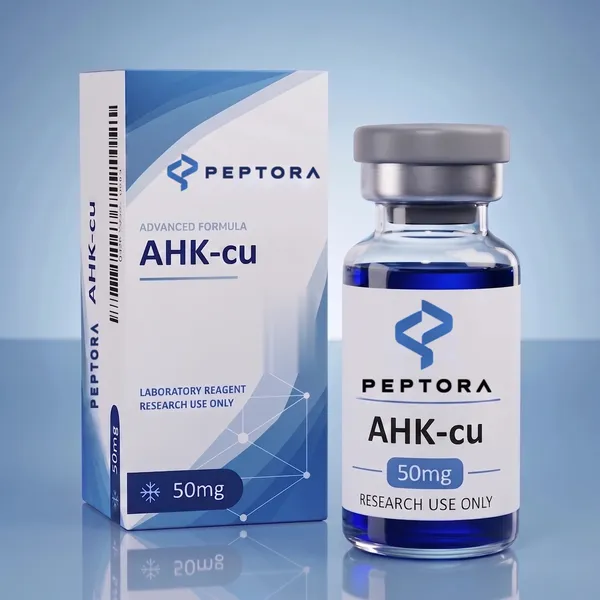
- How the related copper peptide AHK-Cu compares with GHK-Cu in the same models.
In summary
GHK-Cu is a small, naturally occurring copper complex with a long research history in matrix remodelling and wound closure models, and broad gene-expression data that point to many possible targets. Separating the roles of the peptide and the copper, and replicating the findings independently, are the main tasks for future work.
Notes for laboratory work
The copper in GHK-Cu changes how it should be handled. Copper ions can catalyse oxidation reactions, as Li, Schöneich and Borchardt describe for metal-catalysed oxidation in peptides and proteins, so avoid mixing GHK-Cu with reducing agents or with other oxidation-sensitive peptides in concentrated solutions. Strong chelators such as EDTA can strip copper from the complex, changing what you are testing. Keep solutions protected from light, prepare them shortly before use, and store the lyophilized powder frozen and dry.
In cell assays, remember that free copper has biological activity of its own, so a copper salt control at the same copper concentration helps separate the effect of the complex from that of the metal.
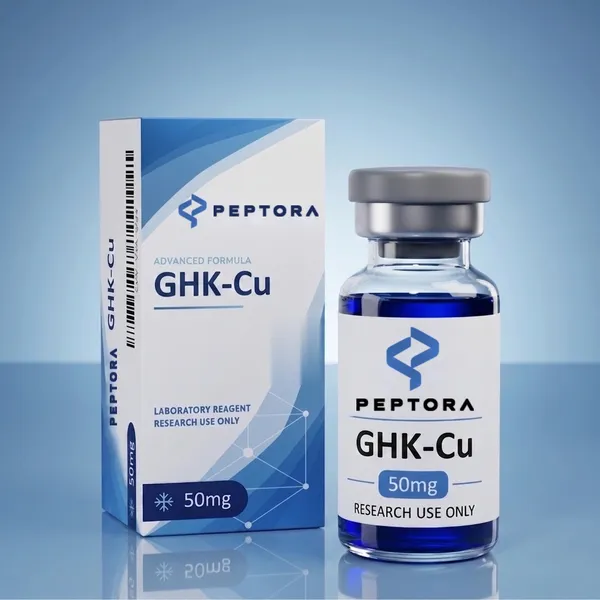
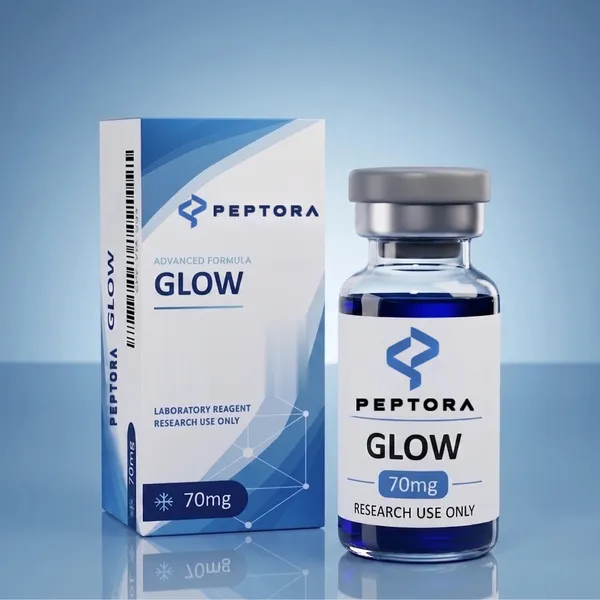
Our GHK-Cu is listed with its current batch report. It is also an ingredient of the GLOW blend, together with BPC-157 and TB-500. For general handling, see handling lyophilized peptides.
Frequently asked questions
What does GHK-Cu stand for?
GHK is the tripeptide glycyl-L-histidyl-L-lysine; Cu is the copper(II) ion it binds. Together they form the copper complex GHK-Cu.
Why is GHK-Cu blue?
The colour comes from the copper(II) ion held in the complex, much like other copper(II) compounds.
What is GHK-Cu studied for?
Mainly extracellular matrix remodelling, collagen and glycosaminoglycan production, wound closure in animal models and its broad effect on gene expression.
How should GHK-Cu be stored?
As a lyophilized powder, frozen, dry and away from light. Keep solutions away from reducing agents and strong chelators, and use them soon after preparing them.
References
- Pickart L, Vasquez-Soltero JM, Margolina A. GHK peptide as a natural modulator of multiple cellular pathways in skin regeneration. Biomed Res Int. 2015. PubMed
- Pickart L, Margolina A. Regenerative and protective actions of the GHK-Cu peptide in the light of the new gene data. Int J Mol Sci. 2018. PubMed
- Pickart L, Margolina A. Skin regenerative and anti-cancer actions of copper peptides. Cosmetics. 2018. DOI
- Li S, Schöneich C, Borchardt RT. Chemical instability of protein pharmaceuticals: mechanisms of oxidation and strategies for stabilization. Biotechnol Bioeng. 1995. PubMed
For laboratory research use only. Not for human or veterinary use. This article summarises published research and is not advice about personal use. You must be 21 or older to order.